
Additional information
| Artista | Kepa Garraza |
|---|


| Artista | Kepa Garraza |
|---|
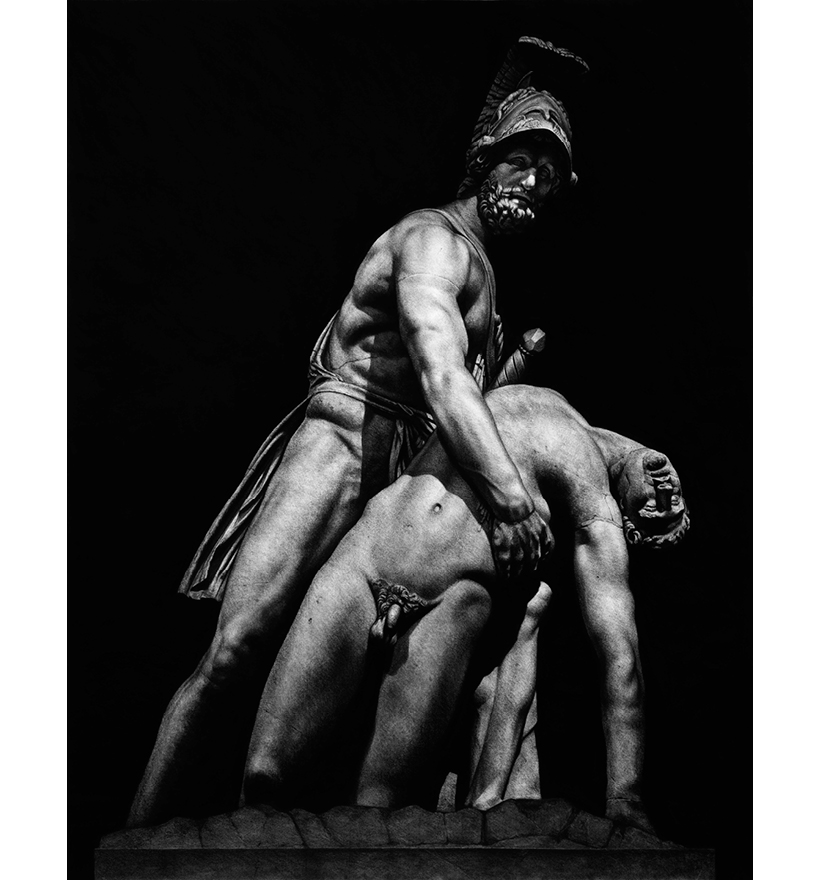
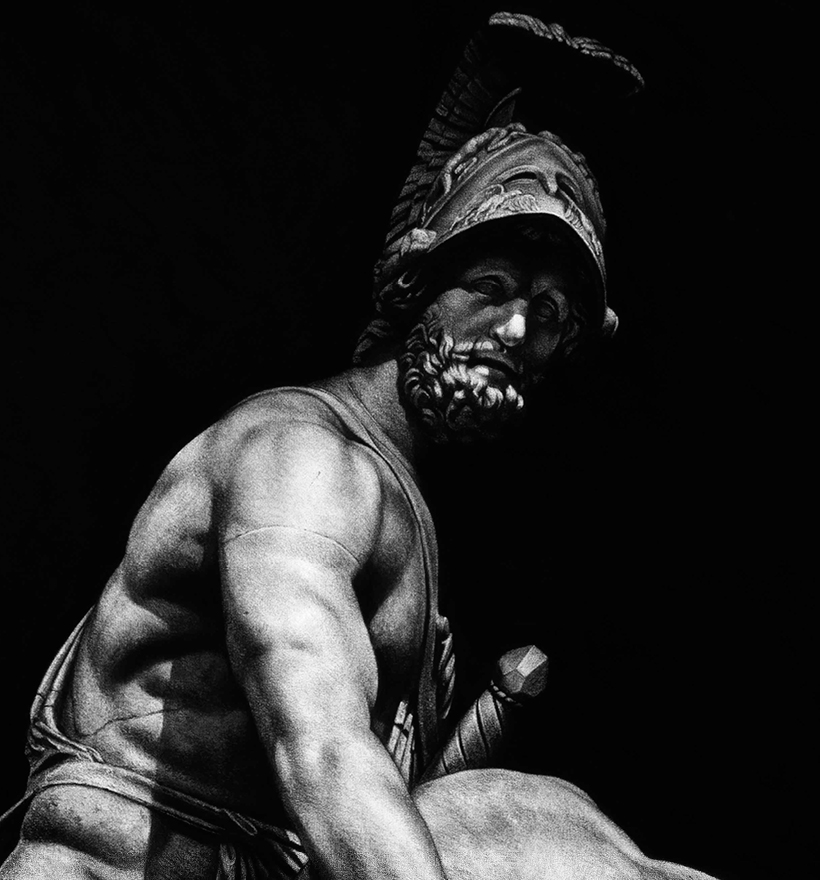
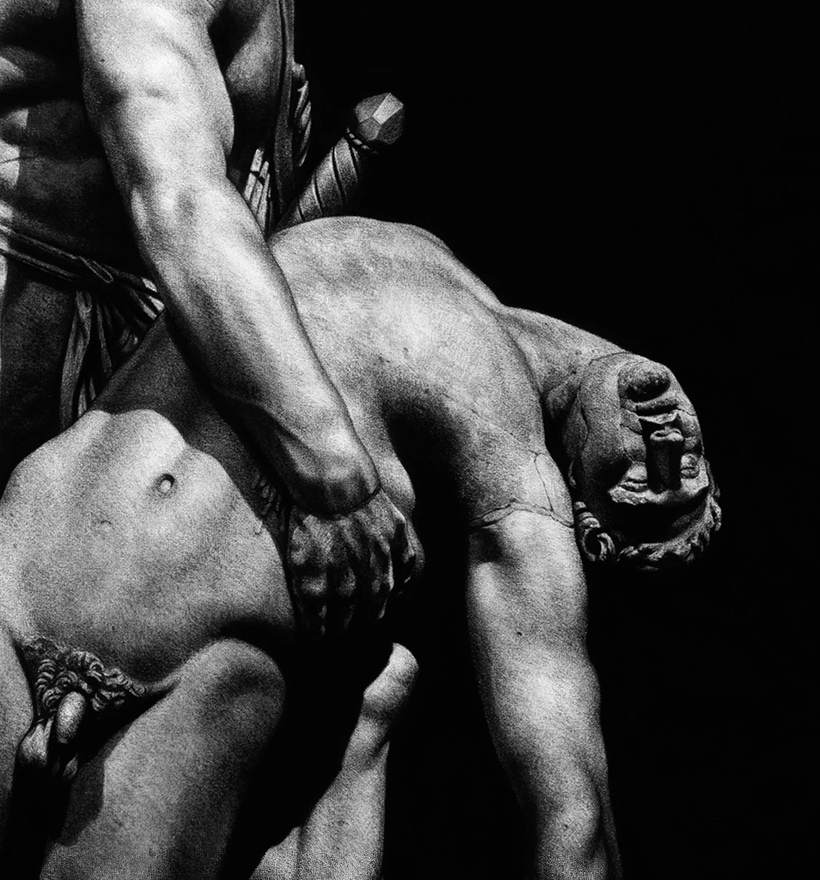
In Menelaus Carrying the Body of Patroclus, Kepa Garraza revisits one of the great sculptural motifs of classical antiquity: Menelaus carrying the lifeless body of Patroclus, a scene linked to the Trojan War and the narrative of Homer’s Iliad.
Executed in compressed charcoal on paper, the work captures the monumentality and drama of classical sculpture through an intense interplay of light and shadow. The black background isolates the figures from any spatial context, accentuating the tension between the warrior’s physical strength and the vulnerability of the body he is holding. The precision of the drawing and the sculptural treatment of the forms reinforce the sensation of being in the presence of an image suspended in time.
Through this reinterpretation, Garraza reflects on the historical construction of the figure of the hero and the mechanisms through which art has contributed to glorifying war and perpetuating certain narratives of power. However, beyond heroic exaltation, the scene reveals a profoundly human dimension: fragility, loss and the consequences of violence.
The work forms part of the artist’s exploration of the relationships between history, representation and collective memory. By reclaiming an image from the past and translating it into the language of contemporary art, Garraza invites us to question how historical narratives are constructed and how their symbols continue to shape our perception of the present.


