Additional information
| Artista | Santiago Talavera |
|---|


2.100,00€
| Artista | Santiago Talavera |
|---|
The central axis of Santiago Talavera’s work is the reflection on the human condition through the investigation of landscape and its symbolic, narrative and spatial possibilities. The absence of the human being in his works, in combination with an intimate and absurd atmosphere in which past and future seem to intermingle, accentuate the need to think about the place we occupy, rather than as mere observers.
How to disappear completely
I have a feeling that drawing is a manual activity whose aim is to abolish the principle of Disappearance. (Or, to put it another way, to transform appearances and disappearances into a game more serious than life itself.)
— John Berger. 2004
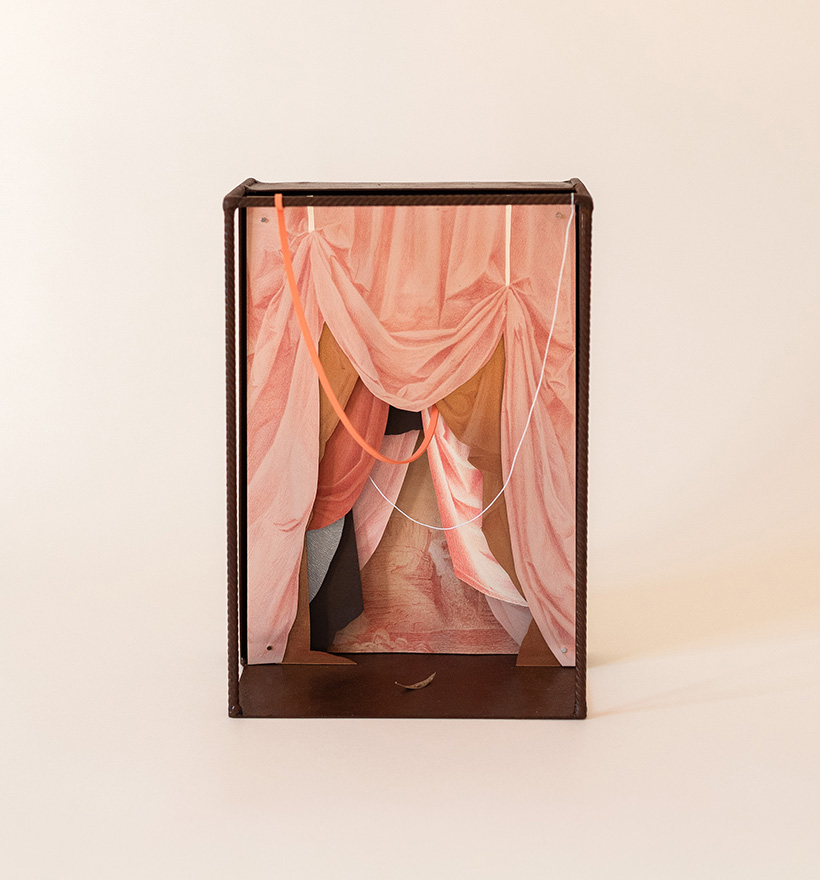
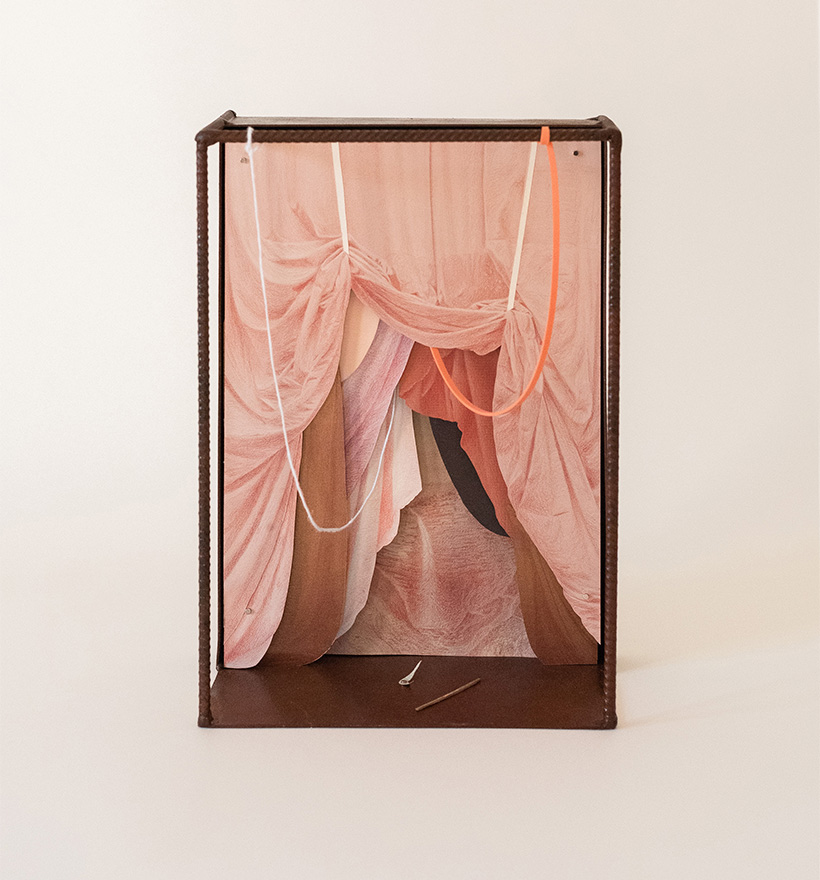
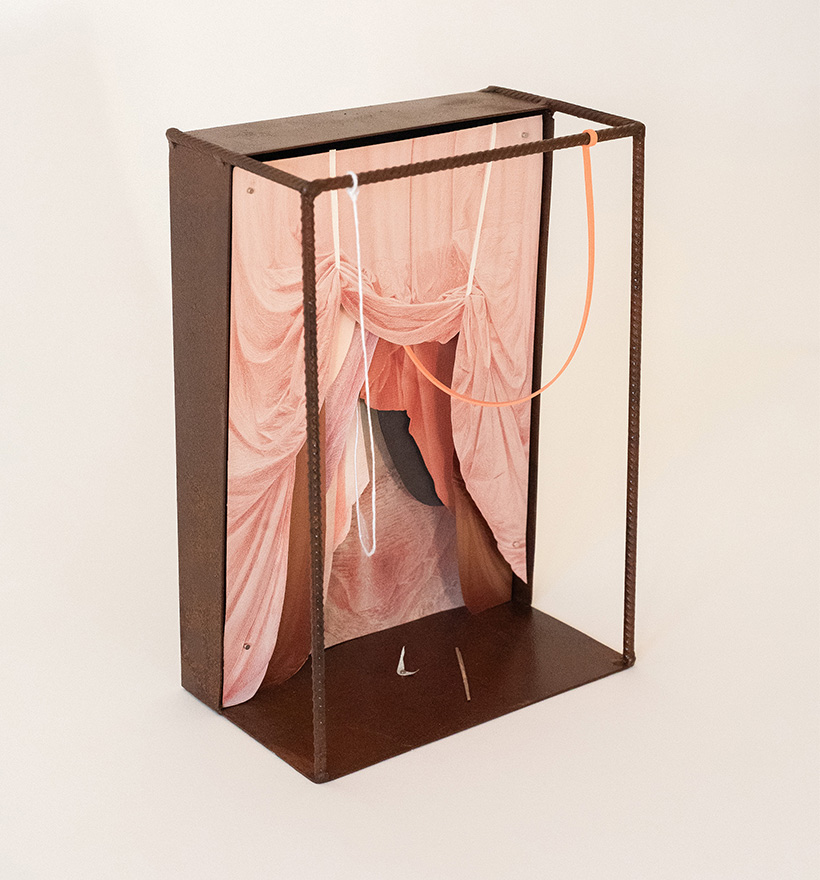
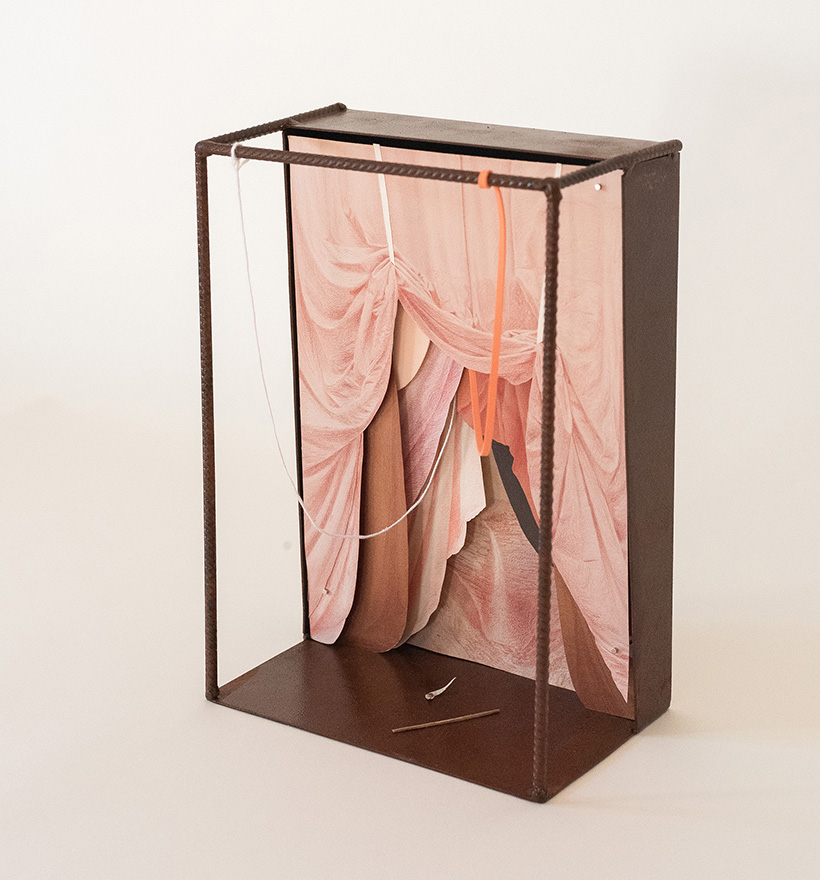
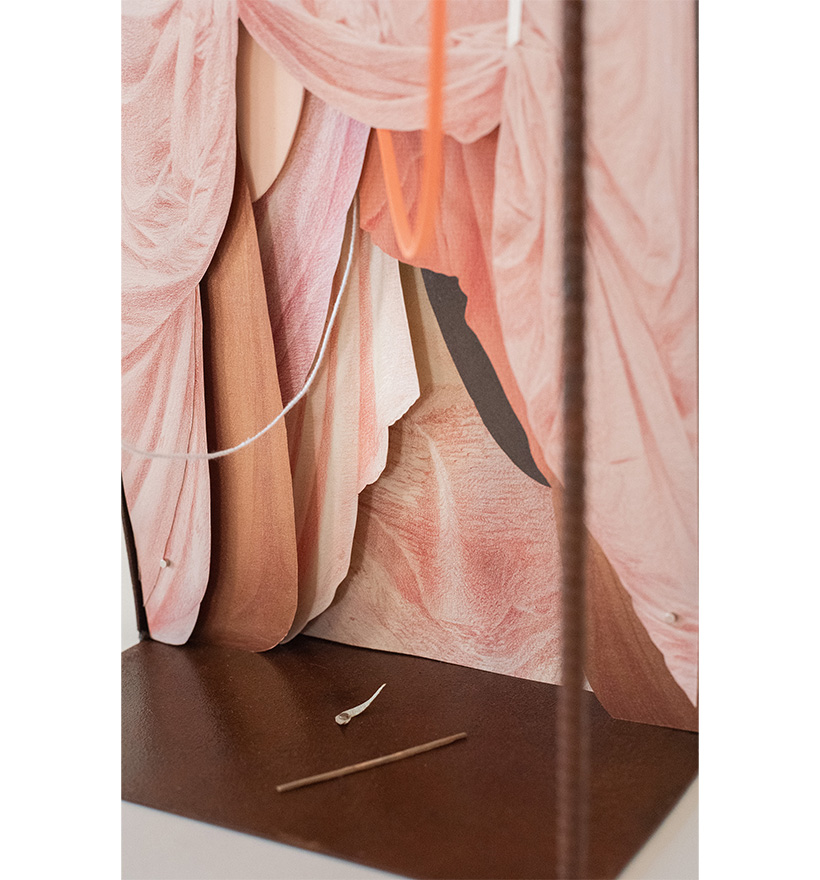
The works in the series How to Disappear Completely, a series of small drawings and collage theatres that I began in late 2024, emerged after The Great Reserve, a large-format drawing in which the elevated view of an abandoned dam is confused with the tiers of an amphitheatre. As in Reinventing the Show (2021) or Failed Apocalypse (2023), it seems that the metaphor of landscape as theatre extends throughout almost all my work as an interface from which to call on us not only to look and represent ourselves, but also to act.
Abolishing the principle of disappearance. We are behind the scenes and the stage machinery has “introverted” the layers of this fragile three-dimensionality. The surrounding natural space seems to take centre stage, and time opens up to another kind of scale and narratives in which we do not participate. In some works in the series, it is the empty stands that observe us. When I think of John Berger’s words, the hidden rules of a game come to mind, a game in which we may have lost but watch the non-human actors continue.
I continue to draw to continue answering these questions. Drawing is a process in which you move forward by correcting mistakes, and I am aware of the contradictions: works that imagine post-capitalism but depend on modern technology and devices in order to exist. These irreversible objects, miniaturised in an attempt to think about ourselves on another scale, are still clumsy and absorbed artefacts that try to search among the traces for what could re-humanise us.
But what does Berger mean by ‘transforming appearances and disappearances’? Imagining how to disappear completely seems like a game ‘more serious than life’. The stage fright we feel when overwhelmed by the context of climate emergency, crises in human relations and political imagination would be enough to dare us to recognise that everything will continue without us. And surely everything will be fine. Perhaps this challenge to our thinking is where we can create alternatives to the barbarism that is coming, this tireless world that is the result of our determination to exist as the centre of everything.
— Santiago Talavera. Mayo de 2025